
When it comes to personal growth, the idea of structuring your life like a business can be an incredibly powerful tool. The Business Model Canvas (BMC) is typically used by companies to streamline and visualize their strategies. However, its principles are equally applicable to personal development. By adopting this framework, you can gain clarity about your personal goals, define your value, and ensure that your day-to-day actions are aligned with the life you want to build. This is where the Personal Business Model comes into play — a model that puts you, the individual, at the center and enables you to structure your life as a thriving, dynamic entity.
Here’s a step-by-step guide on how to use the Business Model Canvas to complement your Personal Development Canvas to translate your vision and strategies for personal and professional growth into an actionable plan for achieving your long-term success.
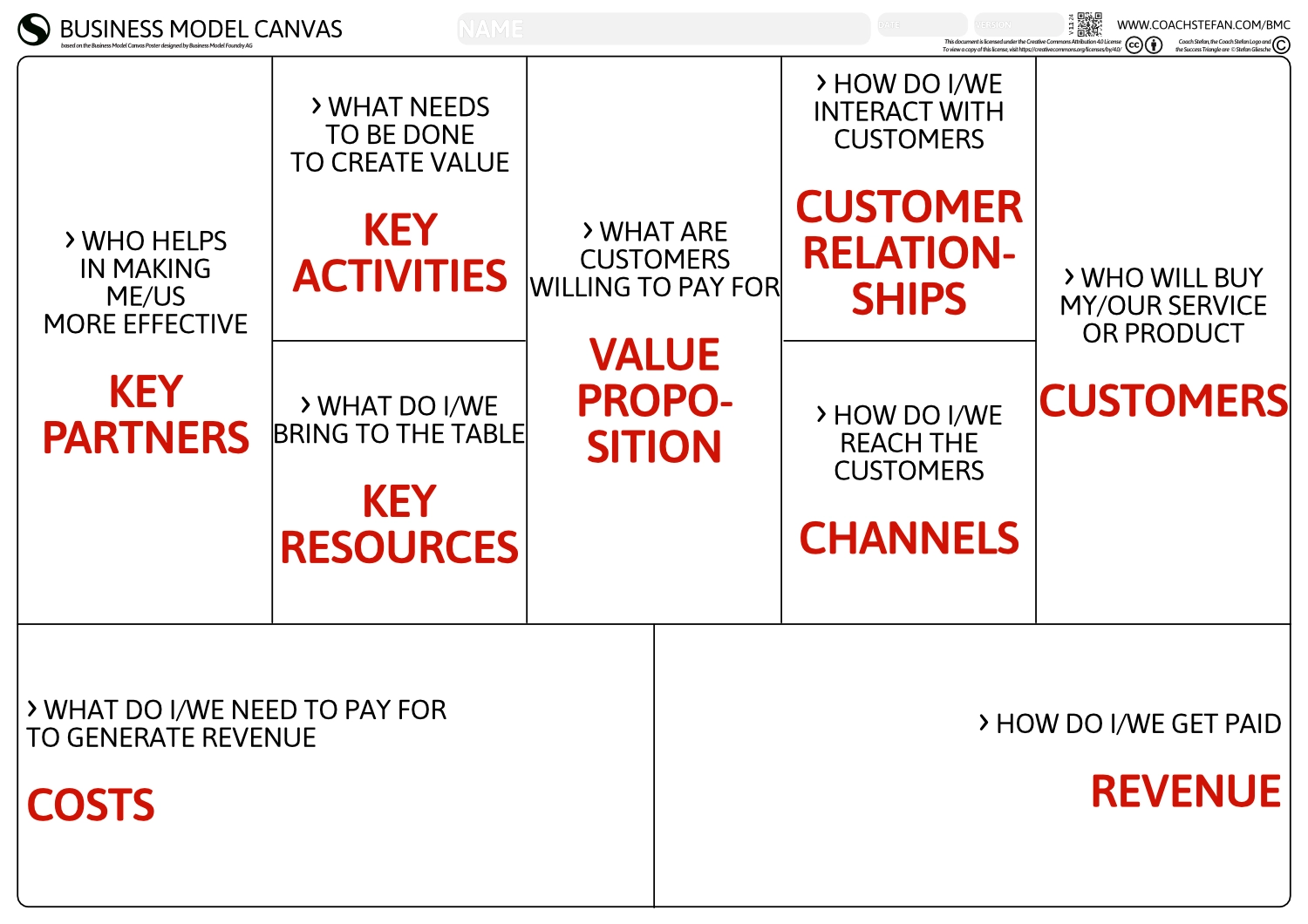
Download your PDF Documents:
If you don’t see your downloads after subscribing, please reload the page. Thank you!
1. Customers: Who Are You Serving?
Understand Your Audience
In any business, knowing your customer is crucial. For personal development, the “customer” is not just a company or client — it’s everyone you interact with and those whose lives are impacted by your work, your skills, and your presence. This includes family, colleagues, clients, friends, and mentors — essentially anyone who benefits from what you do. But importantly, one of the most powerful customers you have is your future self.
Identify Your Key Stakeholders
To create a successful personal business model, it’s essential to identify who directly benefits from your contributions. This could be:
- Internal customers: People in your immediate environment — colleagues, supervisors, or family members who depend on your expertise, support, or guidance.
- External customers: Those outside your immediate circle who may benefit from your work, like clients, students, or your broader professional network.
- Future self: You must also think about the value you’re creating for your future. This includes the skills you’re developing, the goals you’re working towards, and the personal satisfaction you’re aiming to achieve.
To begin, jot down the names and roles of the people who benefit from your work. Are they coworkers who rely on your expertise? Clients who look to you for solutions? Or perhaps you’re crafting a life vision where you are your own customer, focused on your growth, future happiness, and fulfillment.
2. Value Proposition: What Problem Are You Solving?
Define Your Unique Value
Your Value Proposition is at the heart of your personal business model. It’s the reason others choose to engage with you. Just as businesses offer products or services to solve a problem, your personal value proposition answers the question: What can you do for others? What makes you stand out, and how do you make a difference?
Craft Your Personal Value
To develop a strong value proposition, think about the unique skills and experiences you bring to the table. Consider what you do best and how you make an impact. This might include:
- Problem Solving: You bring solutions to complex challenges in your work or relationships.
- Creativity and Innovation: You introduce fresh ideas or artistic insights that others appreciate.
- Support and Guidance: You offer mentoring or emotional support, helping others navigate difficult decisions.
- Efficiency: You help others achieve their goals faster, more effectively, or more cost-effectively.
Your value proposition is a mix of what you offer professionally and personally — it encompasses both the work you do and the relationships you nurture.
Reflect on the things you’re particularly good at. Write down the problems you can solve for others — whether it’s in your work, your friendships, or family dynamics. The clearer you are about the value you offer, the easier it will be to build a fulfilling, meaningful life.
3. Channels: How Do You Deliver Your Value?
Communicate Your Value Effectively
In business, channels are the methods used to deliver products or services to customers. For your personal business model, channels are how you communicate and deliver your value to others. This is how you get your message across and create meaningful connections.
Reach Your Audience
Consider all the ways you engage with others. These can be physical, digital, direct, or indirect. Some common channels might include:
- In-person interactions: Meetings, workshops, and networking events.
- Digital platforms: Social media profiles, websites, and email.
- Public Speaking: Delivering value through presentations or speeches.
- Written content: Blogging, writing articles, or publishing a book.
- Referrals and word-of-mouth: How people discover your work or your brand through recommendations.
Channels are the ways you stay connected with your customers (or your network) and continue to provide value.
Identify which channels you use most often and which ones are most effective for you. Are you most engaged through social media? Do you have one-on-one conversations with clients or colleagues? Make sure to list the methods that resonate most with how you like to communicate and connect.
4. Customer Relationships: How Do You Build Long-Term Connections?
Strengthen Your Bonds
In both business and personal development, relationships are essential. Customer relationships in the personal business model refer to how you nurture and maintain your connections. These relationships are built on trust, value, and mutual respect.
Tailor Your Relationships
You’ll find that different types of relationships require different levels of engagement:
- Transactional relationships: These are more short-term or task-based, like a brief coaching session or a quick business transaction.
- Personalized relationships: These are deep, long-term connections where you invest time in understanding the other person’s needs, like mentoring or close friendships.
- Automated relationships: These can include regular check-ins, emails, or newsletters that keep people informed or engaged without requiring heavy personal involvement.
Think about how you maintain relationships and which ones require more attention. You may need to spend more time fostering deep personal connections with mentors or close friends while automating more professional or transactional engagements.
5. Revenue: How Do You Generate Income or Value?
Create Sustainability
In a personal business model, revenue isn’t just about financial income — it can also be the value or rewards you gain from your work, both tangible and intangible. Revenue ensures that the work you’re putting into your personal development and your relationships brings returns.
Define Your Income Streams
For individuals, revenue can come from various sources:
- Employment income: Regular salary or wages from your job.
- Freelance income: Payments from clients for services like coaching, consulting, or freelance work.
- Intellectual Property: Income from selling your expertise in the form of courses, books, or online content.
- Passive Income: Earnings from investments, dividends, or royalties.
- Emotional and Intellectual Fulfillment: The sense of satisfaction you get from learning, personal growth, or helping others.
Consider where your money, time, or energy is coming from. What are the sustainable sources of income or reward in your life? List your primary income streams and ensure that they align with your value proposition. Is there a way to diversify or increase your revenue by leveraging your skills or talents?
6. Key Resources: What Do You Need to Succeed?
Empower Your Success
Your Key Resources are the assets — both tangible and intangible — that you need to execute your personal business model effectively. These resources enable you to create value, develop your skills, and achieve your goals.
Identify Your Essential Assets
Key resources might include:
- Skills and Expertise: Your unique talents, knowledge, and abilities that help you deliver value.
- Physical Tools: Things like a laptop, office space, or specialized equipment for your work.
- Networks and Relationships: The people who can provide guidance, collaboration, or opportunities.
- Financial Resources: Money or savings you need to invest in your growth or your projects.
- Mental and Emotional Resources: Resilience, focus, time, and energy to stay on course.
Think about the resources that are essential to your success. Which ones do you need to prioritize or develop? Are there areas where you need to invest more, such as acquiring new skills, building a network, or increasing your financial stability?
7. Key Activities: What Are You Doing to Deliver Value?
Focus on What Matters
Key Activities are the actions you take regularly to create value and achieve your goals. These are the things that drive your personal business forward.
Concentrate On Your Essential Actions
Key activities could include:
- Delivering Your Service: Your special abilities in action
- Learning and Development: Courses, books, and experiences that expand your knowledge.
- Networking: Building and maintaining professional relationships.
- Creating Content: Writing, designing, or producing work that showcases your expertise.
- Coaching or Mentoring: Helping others develop or grow.
Identify three to five core activities that define your personal business. These are the actions you need to be consistently engaged in to deliver value, advance your career, or enrich your relationships.
8. Key Partners: Who is Helping You Achieve Your Goals?
Collaboration is Key
No person is an island. Key Partners are the individuals, organizations, or resources that support you in reaching your personal goals. These are the allies, mentors, collaborators, and external systems that provide the necessary resources, guidance, or opportunities to help you succeed. Building a strong network of key partners allows you to leverage their expertise, experience, and connections, which can accelerate your growth and help you overcome obstacles along the way.
Identify Your Support System
Key partners can come in many forms, and they play different roles in your personal development journey:
- Mentors and Coaches: People who offer guidance, wisdom, and support, helping you navigate challenges and offering feedback on your progress.
- Collaborators: Individuals you work with on projects or initiatives that help you achieve shared goals. These might be peers, colleagues, or business partners who complement your skills.
- Friends and Family: People who provide emotional support, encouragement, and a sense of stability, helping you stay motivated and grounded.
- Professional Networks: Groups, communities, or associations that provide resources, knowledge, and connections to advance your career or personal growth.
- External Services and Tools: Resources like online platforms, books, or personal development programs that help you build new skills, stay organized, or track your progress.
Take time to assess who you rely on for support. Identify those who help you achieve your personal goals — whether they provide professional advice, emotional encouragement, or practical resources. Cultivate these relationships by investing time in maintaining and strengthening them. Consider seeking out new partners who can bring additional value to your personal growth journey, whether it’s through collaboration, mentorship, or resources you may be missing.
9. Costs: What Are Your Investments?
Create Balance and Sustainability
In business, understanding the Cost Structure is crucial to ensuring long-term sustainability. For your personal business model, the costs are not just monetary but also time, effort, and energy. Balancing your personal investment is key to ensuring that you can continue to grow and succeed without burning out or overextending yourself.
Identify Your Costs
Costs in your personal business model can come from a variety of areas, including:
- Time Investment: The amount of time you dedicate to personal development, learning, networking, or other growth activities.
- Financial Investment: Money spent on courses, tools, resources, or travel that supports your goals.
- Emotional Energy: The mental and emotional energy you invest in relationships, decision-making, and staying focused on your vision.
- Opportunity Costs: The trade-offs you make when prioritizing one goal over another, such as choosing to focus on a new skill rather than pursuing a short-term project.
Create a list of all the personal and professional investments you make toward achieving your goals. Assess whether these costs are in balance with the returns you’re seeing — in terms of personal growth, success, and fulfillment. If you find certain areas consuming too much time or energy without yielding sufficient results, adjust your approach. Focus on making investments that align with your value proposition and the goals you’re pursuing.
Putting It All Together: Creating Your Personal Business Model
Gain A Holistic Vision of Your Life
Now that you’ve mapped out the key components of your personal business model, the next step is to create a holistic vision for your life. Just like businesses need a strategy to ensure growth, so too do you. A personal business model is a living document that should evolve over time, adapting to new insights, experiences, and opportunities. By continuously refining your model, you stay focused, motivated, and clear on what steps you need to take to create the life you want.
Integrate Your Personal Business Model
Look at your Personal Business Model Canvas as a whole. How do the individual components come together to support your overall vision? The relationships you build, the value you offer, the resources you use, and the activities you engage in should all work together to help you achieve your personal goals.
Start by setting clear, actionable goals based on the insights you’ve gained from this process. Use your canvas as a guide for daily decision-making. When faced with choices, ask yourself:
- Does this align with my value proposition?
- Does this contribute to my key activities?
- Will this partnership move me closer to my goals?
Take the time to synthesize everything you’ve mapped out in your canvas. Write a one- or two-page summary that outlines your personal business model. Review it periodically, making adjustments as needed. Over time, you’ll begin to see patterns in how your time and resources are used, which will help you refine your focus and prioritize what truly matters.
Recommended Reads
These books by the developers behind the Business Model Canvas come highly recommended to get a more profound view on how to use it in personal and organizational environment.
Business Model Generation: A Handbook for Visionaries, Game Changers, and Challengers
by Alexander Osterwalder and Yves Pigneur
Business Model You: The One-Page Way to Reinvent Your Work at Any Life Stage
by Alexander Osterwalder, Yves Pigneur, Tim Clark, and Jane McGonigal
Using the Business Model Canvas to translate your Personal Development Canvas into a powerful strategy gives you a clear, actionable framework for creating a life that reflects your values, leverages your strengths, and maximizes your impact. By focusing on the key components — your value proposition, channels, relationships, and resources — you create a blueprint that helps you grow, both personally and professionally.
As you move forward, remember that this canvas isn’t static. It’s a tool that will evolve with you. Your personal business model will continue to shift as you grow, learn, and discover new passions. Treat it as a dynamic guide, one that ensures your path remains purposeful and aligned with your deepest aspirations.