
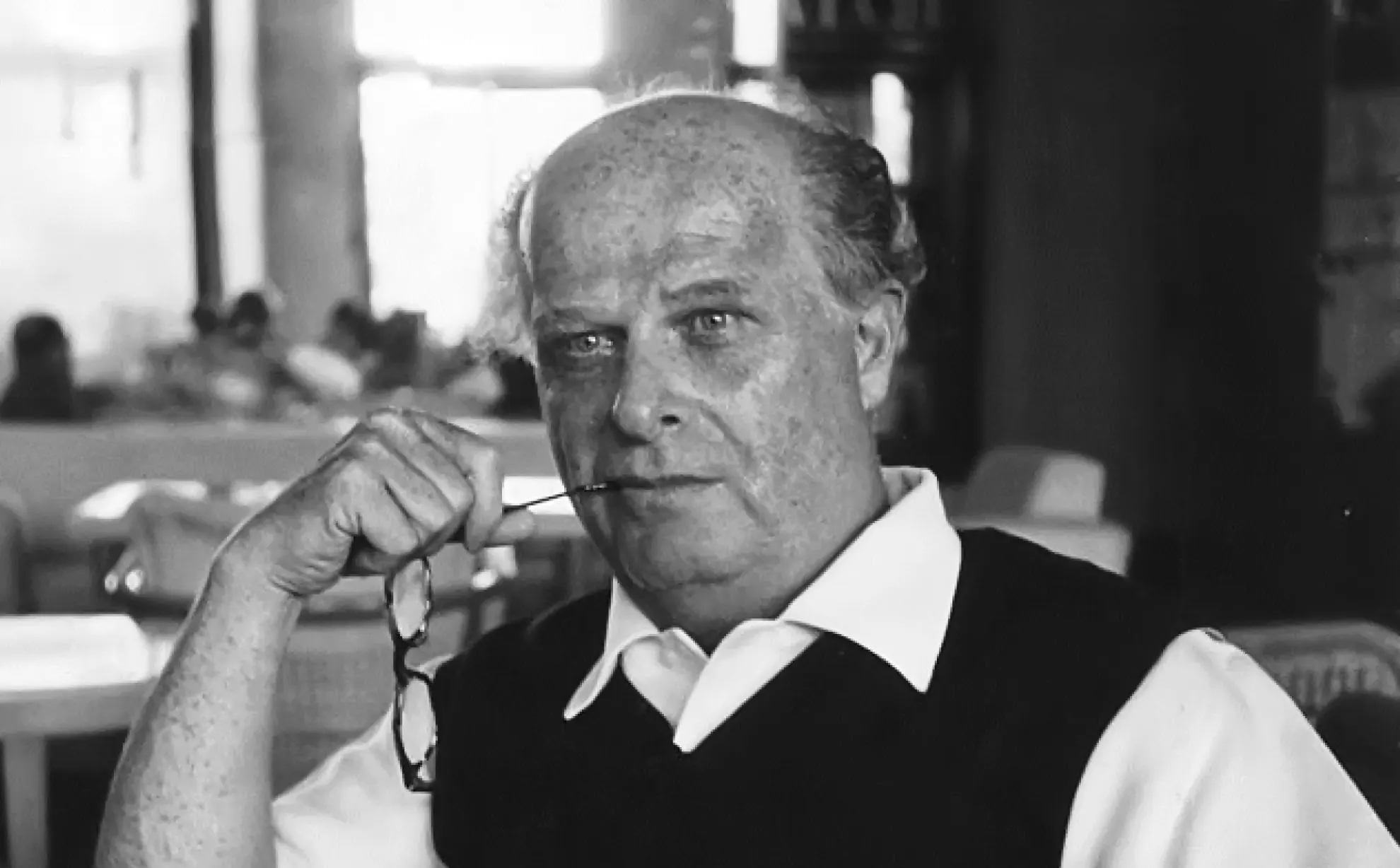
There are figures in history who build successful companies. And then there are those rare individuals who quietly reshape the way we think about work, leadership, and society itself.
Adriano Olivetti belongs to the second group.
His name is often associated with elegant typewriters, early computing machines, and one of the most innovative companies of the twentieth century. Yet focusing only on his industrial success would miss the deeper story. Olivetti was not simply creating products. He was exploring a question that still feels urgent today:
What kind of society do we create through the way we work?
To understand the power of his ideas, it helps to see his life as a journey—one that moves through political tension, intellectual discovery, entrepreneurial brilliance, and, ultimately, the creation of something that still feels quietly revolutionary.
The Making of a Vision
Adriano Olivetti’s story begins in Ivrea, a small town in northern Italy that would later become inseparable from his legacy. He grew up in a family shaped by industry. His father, Camillo Olivetti, had founded a company that was already gaining recognition for its precision and quality.
Yet Adriano’s path was never going to be a simple continuation of what already existed.
From early on, he lived at the intersection of different worlds. On one side stood the discipline of engineering and production. On the other, a growing curiosity about society, culture, and the human condition.
The political climate of the time added another layer of complexity.
In 1931, the authorities in Aosta labeled him as “subversive.” Italy was under Fascist rule, and identity itself had become a matter of bureaucratic classification. Because of his father’s Jewish origins, Adriano had to obtain official certification of belonging to the so-called “Aryan race.” It was a moment that revealed how deeply political systems could shape personal lives.
At the same time, he was stepping into increasing responsibility within the family company. He became general manager while still a young man, navigating expectations, pressure, and the demands of leadership.
This dual experience – being both inside a system and quietly questioning it – became one of the defining elements of his character.
A decisive turning point came when he moved to Milano with his wife, Paola Levi.
Milano in those years was more than an economic center. It was a place where ideas circulated freely. Adriano found himself surrounded by architects, writers, sociologists, and thinkers who approached society as something that could be designed, improved, and reimagined.
Through these encounters, his perspective expanded.
- Architecture showed him how space influences behavior and well-being.
- Sociology revealed the invisible structures that shape communities.
- Psychology offered insights into human motivation and identity.
He began to see the factory differently.
No longer just a place of production, it became, in his mind, a living environment where human life unfolds. A place where people spend a significant part of their existence. A place that can either diminish or elevate.
At the same time, his relationship with the Fascist regime remained complex.
Like many entrepreneurs of his time, Olivetti maintained a cautious proximity to power. He engaged with figures such as Benito Mussolini and Giuseppe Bottai, navigating a system that required a certain level of alignment for anyone in a position of responsibility.
Yet personal experiences gradually reshaped his stance.
Members of his extended family faced arrest due to anti-fascist activities. Adriano became directly involved in supporting them, investing time, energy, and personal resources. These moments brought political reality into his immediate life, transforming abstract ideas into lived experience.
Over time, his distance from the regime grew.
The Second World War marked a decisive break. Olivetti took refuge in Switzerland, where he remained in contact with the Italian Resistance. These years became a period of reflection and intellectual development.
Freed from immediate operational pressures, he began to articulate a vision that went beyond existing ideologies.
Neither unrestrained capitalism nor centralized state control seemed capable of creating a society that respected both human dignity and collective progress.
He started to imagine a different path.
- A society rooted in community.
- An economy guided by responsibility.
- A form of leadership grounded in ethical awareness.
These ideas would later find expression in Ai lavoratori, a text that reads less like a manifesto and more like a conversation with the people who make an organization possible.
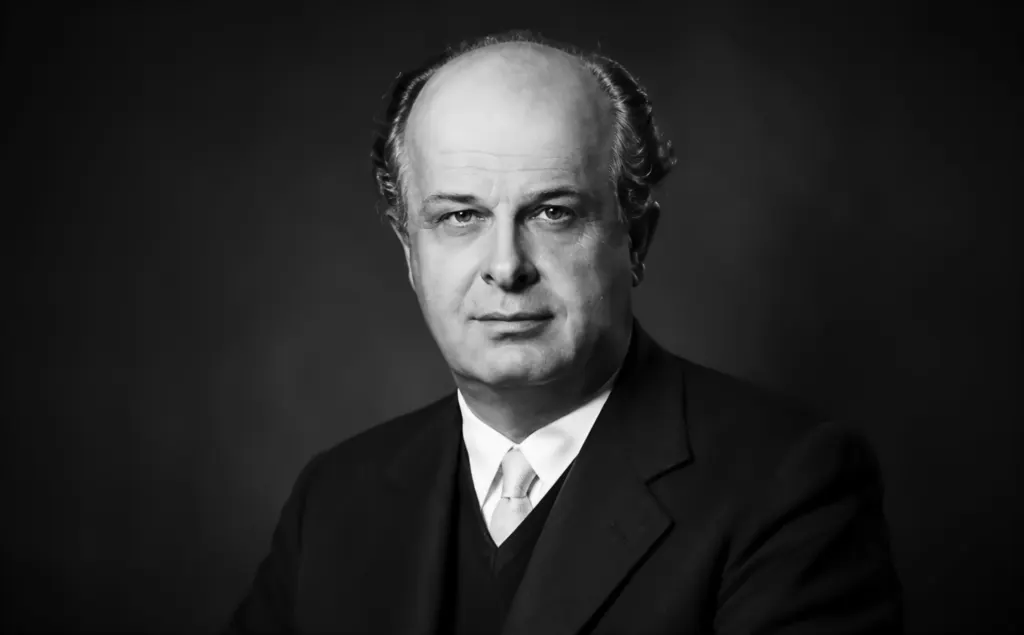
When he returned to Italy after the fall of the regime, he carried with himself way more than new business plans: he brought a vision of what a company – and perhaps society itself – could become.
The Rise of an Industrial Visionary
Back in Ivrea, Adriano Olivetti resumed leadership of Olivetti and began one of the most remarkable industrial journeys of his time.
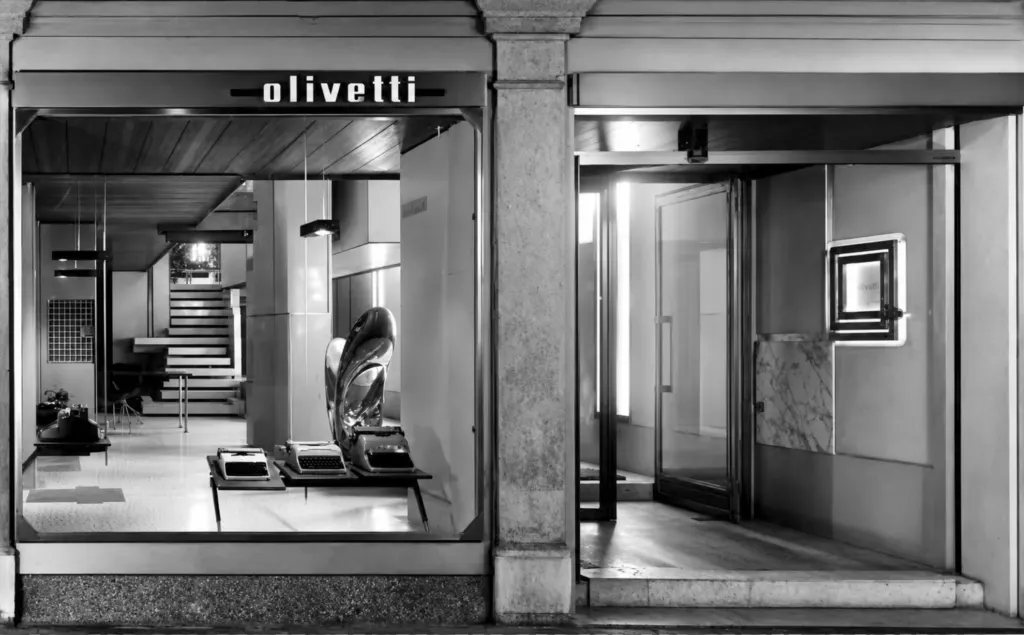
His managerial abilities quickly became evident. He had a rare combination of strategic clarity and creative curiosity. He understood markets, technology, and organization in a way that allowed the company to grow rapidly and confidently. Under his leadership, Olivetti became a global reference point in office equipment, producing typewriters and calculating machines that stood out not only for their functionality but also for their design.
The company eventually reached a position where it was considered among the leading enterprises in its field worldwide.
And still, the most interesting part of his leadership lies in the way he approached success itself: Olivetti never treated economic growth as an end in itself. He saw it as a means. A means to explore how industrial development could align with human values. A means to test whether a company could operate efficiently while nurturing the people who made it possible.
He brought together engineers, designers, architects, and thinkers, creating an environment where innovation felt natural. Collaboration was not forced. It emerged from a shared sense of purpose.
His curiosity extended beyond technology.
- He explored how work shapes identity.
- He studied how environments influence well-being.
- He reflected on how organizations could foster participation and responsibility.
One of his most distinctive beliefs was that human beings, when given the right conditions, naturally strive to contribute.
This trust in people became a cornerstone of his leadership.
He did not design systems to control behavior. He designed environments that encouraged growth.
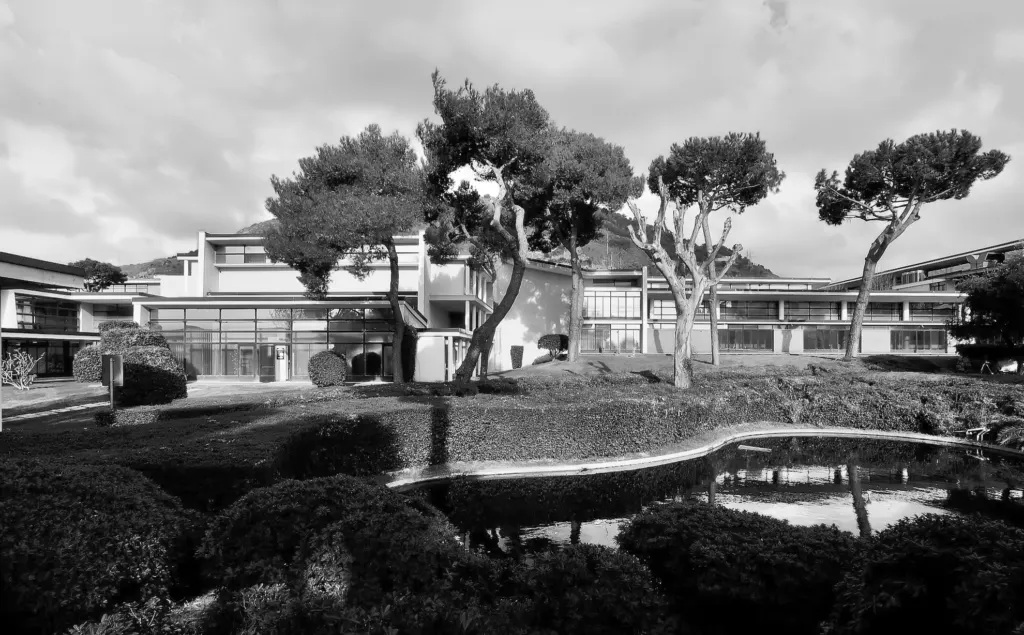
His collaboration with architects such as Luigi Figini and Gino Pollini brought this philosophy into physical form. Influenced by ideas associated with Le Corbusier, they created buildings that emphasized light, openness, and harmony.
Walking through those spaces, one could feel a sense of intention.
- The factory was not hidden from the landscape. It was integrated into it.
- The architecture did not impose. It invited.
- The environment communicated respect.
Olivetti understood that beauty is not a luxury: it is a form of care.
At the same time, he developed a broader social vision centered on the concept of community.
He imagined a system in which companies, public institutions, universities, and workers collaborate as interconnected parts of a larger whole. Each contributes to the well-being of the community. Each shares responsibility.
This idea reflected a deeper philosophical orientation.
Some observers later noted similarities between his thinking and the social ideas of Rudolf Steiner, particularly regarding the balance between economic, cultural, and social spheres. Whether through direct influence or parallel development, Olivetti’s vision moved consistently toward integration rather than separation.
He did not see business, culture, and society as distinct domains: he saw them as parts of a single living system.
A Company That Changed the Meaning of Work
The true power of Adriano Olivetti’s vision becomes visible in the way he transformed his own company. In the post-war years, the factory in Ivrea evolved into something that stood apart from the industrial norms of the time.
Workers received salaries that were higher than those offered by many comparable companies. Yet the material dimension tells only part of the story.
Olivetti invested heavily in the quality of life of his employees.
Housing projects provided comfortable living spaces close to the workplace, designed with attention to aesthetics and integration with the surrounding environment. Families benefited from childcare facilities, educational opportunities, and social services that supported their daily lives.
Inside the factory, the atmosphere felt different. Employees had access to libraries, cultural programs, and concerts. Spaces were created for discussion and exchange. The rigid separation between different roles softened, allowing knowledge and experience to circulate more freely. Engineers and workers interacted in ways that encouraged mutual understanding.

Olivetti also made a remarkable decision to bring artists, writers, designers, and poets into the company. This choice reflected a deep belief: work gains meaning through creativity and cultural expression.
A factory, in his vision, was more than a place of technical production: it should become a space where human potential could unfold in multiple dimensions.
This approach extended to organizational structures as well. He explored forms of governance that involved different stakeholders – shareholders, workers, public institutions, and cultural organizations. The goal was to create a balance of interests and a shared sense of responsibility.
At the heart of this model stood the idea of collective well-being.
Olivetti believed that when people feel respected, connected, and inspired, they contribute with energy and commitment. Productivity grows as a natural consequence of this environment.
This belief shaped what many later described as a unique industrial experience – one that combined economic success with social progress and cultural richness.
And it worked.
Olivetti products gained international recognition. The company became a symbol of innovation and design. At the same time, it stood as a living example of how a business could contribute positively to society.
Through his work, Adriano Olivetti demonstrated that it is possible to create a company that performs at the highest level while remaining deeply connected to human values.
A Living Inspiration
Looking back at Adriano Olivetti’s life, one senses a quiet coherence. His ideas, his leadership, and his actions align. He did not separate thinking from doing. He did not separate success from responsibility. He built a bridge between vision and reality.
For today’s leaders, entrepreneurs, and thinkers, his story offers something rare: an invitation.
- An invitation to look beyond established systems.
- An invitation to take responsibility not only for results, but for impact.
- An invitation to create organizations that reflect a deeper understanding of what it means to be human.
In a world that continues to search for balance between growth and responsibility, Olivetti’s legacy feels both relevant and inspiring. He showed that a company can be more than an economic entity. It can be a place of culture. A space of dignity. A force for community.
And perhaps most importantly, he showed that visionary ideas gain their true power when they are lived – day by day, decision by decision, within the structures we create.
Adriano Olivetti did not simply imagine a better society. He began to build it.